Introducing Cronochat: Supercharge Your Slack with Recurring, Scheduled, Broadcast, and Anonymous…
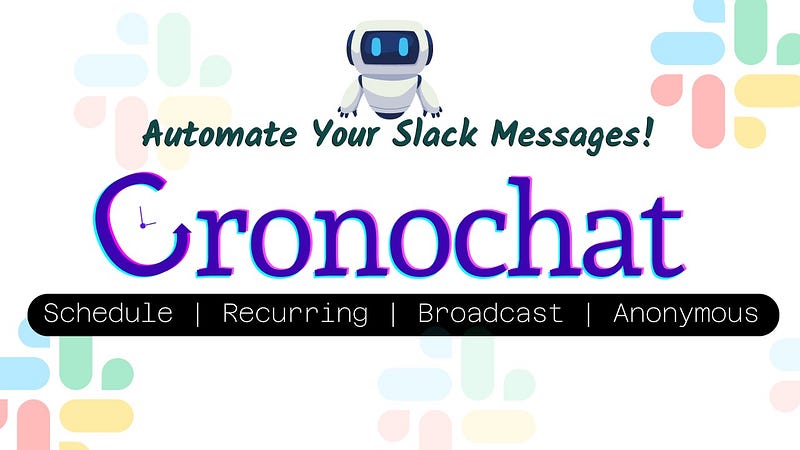
cronochat
Slack is an incredible tool for team communication, but it does have a few limitations:
- You can’t send recurring messages.
- You can’t schedule messages to individual users.
- Broadcasting the same message to multiple users or channels in one go isn’t available.
- And, sometimes, you wish to receive honest, anonymous feedback — but Slack doesn't allow that either.
That’s where Cronochat comes in!
Cronochat is a simple, powerful Slack app that fills these gaps:
Key Features:
Recurring Messages: Send messages that repeat on a schedule — perfect for daily standups, reminders, or team updates.
Scheduled Messages to Users & Channels: Schedule a message not just for channels, but for individual users too!
Broadcast Messaging: Send the same message to multiple users or channels in a single click.
Anonymous Messages: Encourage honest feedback and opinions by allowing users to send anonymous messages.
Who is it for?
Whether you’re managing a team, running a community, or leading a project — Cronochat makes communication smoother, faster, and more effective.
Pricing
We keep it simple:
Free for Slack workspaces with up to 30 members.
For larger workspaces (more than 30 members), it’s just $0.70 per user — affordable and scalable.
Why Cronochat?
No complicated setup.
Clean and user-friendly interface.
Solves real pain points that Slack doesn’t natively cover.
Get Started Today!
Bring automation, simplicity, and honest communication to your Slack.
About the author

We have other interesting reads
Powerful Marketing Strategies to Skyrocket Your SaaS Growth
Growing a SaaS business is challenging. However, employing targeted and effective marketing strategies can transform your idea from a small startup into a profitable, scalable business.
Conversational Finance: AI Assistant that talks to your Fund Data
We have been working with VC funds and taxation for sometime, and we thought it is high time we had a new way for fund managers and tax specialists to interact with financial data — naturally, securely, and instantly.
Merge Channels in Go(lang)
Recently, I had to deal with receiving several events from Kafka. They were about 6 different types of them, but internally, the ways I…